Hokum (2026) Movie Review: A Smartly Contained, Refreshingly Spiky Irish Folk Horror Tale - High On Films
Share itWhat’s most impressive about “Hokum” is how nimble it is at using familiar horror conventions in a manner that doesn’t feel derivative. The word “trauma” is so frequently associated with the genre that horror cinema has because of its own form of melodrama, particularly in an independent film like “Hokum” that makes use of its confined location and stylized choices. The difference is that director Damian McCarthy uses these hallmarks as a canvas to deliver a continuous stream of scares that highlight why horror is best experienced with a live audience. While not every idea is original, “Hokum” isn’t necessarily “safe;” the willingness to present nuanced ideas without coddling the viewer offers the right blend of catharsis and provocation needed for a spooky good time.
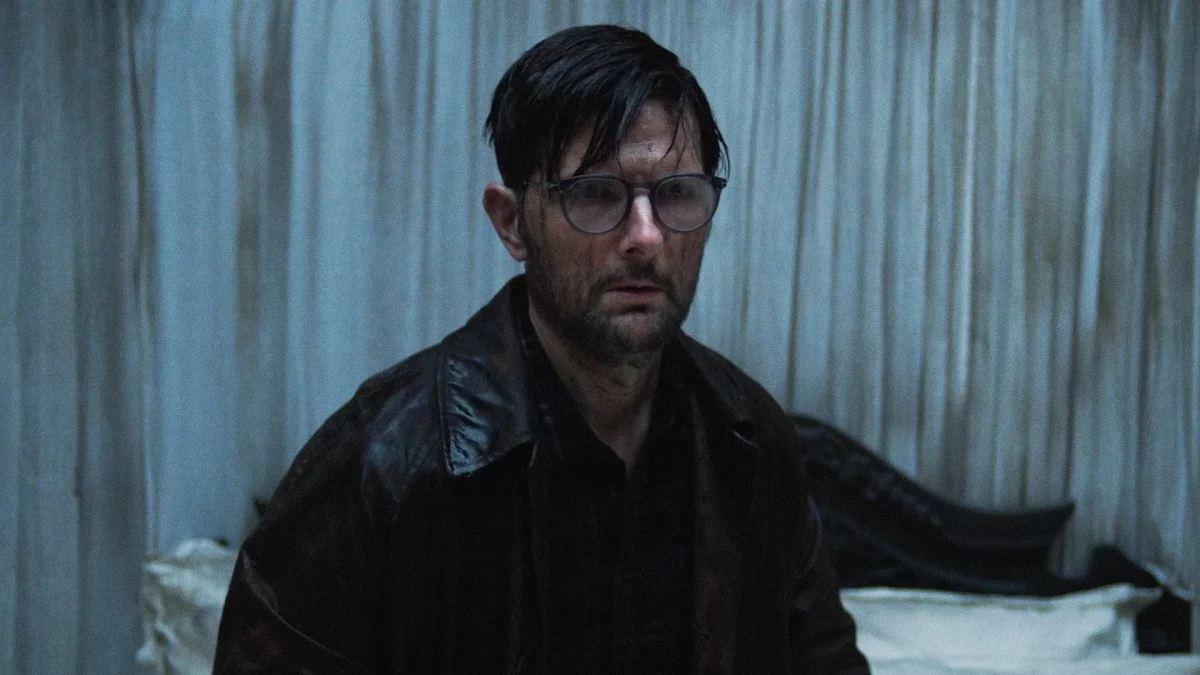
Adam Scott stars in “Hokum” as the popular author Ohm Bauman, who has traveled to Ireland in order to spread the ashes of his deceased parents. Ohm isn’t popular enough to rent lavish accommodations, but his work has gained enough notoriety that he is recognized by the staff of the remote inn he has stayed at. While the friendly, yet socially ignorant bellboy Alby (Will O’Connell) has peppered him with questions he doesn’t want to answer when it comes to his creative process, Ohm is slightly more receptive to the bartender Fiona (Florence Ordesh) and the mysterious vagrant Jerry (David Wilmont), both of whom are able to spit back at him with same spiteful attitude. It’s once Ohm’s reality begins to crumble that he realizes his destination serves a dark purpose, but not one that he can wrap up simply like one of his stories.
The most striking aspect of “Hokum” when compared to the futile subgenre of horror films about writers (or frankly any creative profession) is that it has no interest in softening Ohm’s edges. He’s not necessarily declarative of his own genius, but Ohm has the perspective of someone who has felt superior, and looks down on the seemingly “simple” lifestyle of the working class people that attend to his whims. However, “Hokum” isn’t as much a class horror story as it is one about culture, as the Irish ancestry within Ohm’s family is something he can only associate with traumatic memories. Ohm’s manner of discussing these painful moments for his past is well-handled in an expositional way; although he makes off-handed comments that would suggest he’s come to have a sense-of-humor, it’s evident that Ohm is still seeking attention like a wounded child. His trip to Ireland was itself a means of fulfilling the wishes of parents he didn’t connect with, and the few details learned about his life in the years that followed would suggest he is still consumed by unfulfilled aspirations.
McCarthy is clever in choosing what to emphasize, as the jump scares used throughout “Hokum” aren’t utilized for the sake of cheap thrills. Ohm is a desensitized character who has adopted a cynical outlook because he thinks it might prevent him from being burdened by torment, but the inverse proves to be true in some surprisingly probing exploration of mental health. It’s not the type of film that offers the easily-clipped moments of indulgent oversharing that could be used to locate a central theme, but Scott adds a remarkable degree of nuance to show how Ohm becomes at odds with his own motivations. Ironically, the film uses its cynical protagonist as a means to show the evolution of his motivation, and the fluctuating stakes make “Hokum” even more twisty as its mythology gets weirder.
“Hokum” doesn’t deflate itself with gags, but it does acknowledge the awkward humor that would come from a detached person being given sympathy for something they don’t know how to grieve. What may seem like simple supporting characters prove to be more robust because McCarthy gives each actor a moment to shine, and “Hokum” gives itself a fairly good series of excuses why this remote location wouldn’t be impeded upon by the outside world. That McCarthy is able to so thoroughly deconstruct his characters (whilst literally going deeper into the primary setting) isn’t just a case of a filmmaker calling his shot, but recognition of what logic dictates the best horror stories. As weird as “Hokum” gets, its stranger moments can be explained by their connection to a strange supernatural flashpoint that has been haunted by supernatural forces. The threats continue to come from within, as McCarthy doesn’t have to bring in outside forces to escalate the tension.
That “Hokum” is structured like a classic folktale isn’t just because of the convenient framing device of being told from the perspective of an author, as the film doesn’t rely on a generic voiceover. Instead of the characters in Ohm’s novels serving as direct parallels to his own life, he’s created a cleaner, more direct work of fiction, which is brought to life in stunning detail that doesn’t feel like self-parody. The notion of fiction and reality mirroring one another is easily done wrong, but it helps that “Hokum” actually does seem to understand the way that writers work. While most would hate the describe their process because of how personal it is, Ohm doesn’t humorously wonder what he can get away with when he’s pressed for ideas.
“Hokum” features so much dramatic character development in its first half that it would seem like a challenge for that momentum to continue, but there’s a point in which the spiraling haunted house conceit morphs into a single, nightmarish setpiece. The pacing that McCarthy achieves is an efficient reflection of the hyper-fixation that Ohm experiences; it’s after an ambiguous period of repression that consequences rear their heads in nasty, seemingly unresolvable ways. There’s subtext to be found that would make a second viewing rewarding, but “Hokum” doesn’t mask itself as obtuse because its script has so many effective payoffs.
Scott is as good as he’s ever been, showing that his dramatic turn on “Severance” was no fluke. It’s not only impressive that Ohm feels like a culmination of his entire body of work, but that he’s able to create a character whose repellant qualities are intriguing; for as much as Ohm is a burden to himself and others, the film isn’t reveling in his pain. That “Hokum” is such a razor sharp thrill-ride would be impressive on its own, but the lingering feeling of dread that it leaves behind solidifies McCarthy as a definitive auteur for scary cinema done right.
Read More: The 10 Best Horror Movies of 2025
Hokum (2026) Movie Links: IMDb, Rotten Tomatoes, Wikipedia, Letterboxd
Where to watch Hokum
Powered by JustWatch
Adam Scott stars in “Hokum” as the popular author Ohm Bauman, who has traveled to Ireland in order to spread the ashes of his deceased parents. Ohm isn’t popular enough to rent lavish accommodations, but his work has gained enough notoriety that he is recognized by the staff of the remote inn he has stayed at. While the friendly, yet socially ignorant bellboy Alby (Will O’Connell) has peppered him with questions he doesn’t want to answer when it comes to his creative process, Ohm is slightly more receptive to the bartender Fiona (Florence Ordesh) and the mysterious vagrant Jerry (David Wilmont), both of whom are able to spit back at him with same spiteful attitude. It’s once Ohm’s reality begins to crumble that he realizes his destination serves a dark purpose, but not one that he can wrap up simply like one of his stories.
The most striking aspect of “Hokum” when compared to the futile subgenre of horror films about writers (or frankly any creative profession) is that it has no interest in softening Ohm’s edges. He’s not necessarily declarative of his own genius, but Ohm has the perspective of someone who has felt superior, and looks down on the seemingly “simple” lifestyle of the working class people that attend to his whims. However, “Hokum” isn’t as much a class horror story as it is one about culture, as the Irish ancestry within Ohm’s family is something he can only associate with traumatic memories. Ohm’s manner of discussing these painful moments for his past is well-handled in an expositional way; although he makes off-handed comments that would suggest he’s come to have a sense-of-humor, it’s evident that Ohm is still seeking attention like a wounded child. His trip to Ireland was itself a means of fulfilling the wishes of parents he didn’t connect with, and the few details learned about his life in the years that followed would suggest he is still consumed by unfulfilled aspirations.
McCarthy is clever in choosing what to emphasize, as the jump scares used throughout “Hokum” aren’t utilized for the sake of cheap thrills. Ohm is a desensitized character who has adopted a cynical outlook because he thinks it might prevent him from being burdened by torment, but the inverse proves to be true in some surprisingly probing exploration of mental health. It’s not the type of film that offers the easily-clipped moments of indulgent oversharing that could be used to locate a central theme, but Scott adds a remarkable degree of nuance to show how Ohm becomes at odds with his own motivations. Ironically, the film uses its cynical protagonist as a means to show the evolution of his motivation, and the fluctuating stakes make “Hokum” even more twisty as its mythology gets weirder.
“Hokum” doesn’t deflate itself with gags, but it does acknowledge the awkward humor that would come from a detached person being given sympathy for something they don’t know how to grieve. What may seem like simple supporting characters prove to be more robust because McCarthy gives each actor a moment to shine, and “Hokum” gives itself a fairly good series of excuses why this remote location wouldn’t be impeded upon by the outside world. That McCarthy is able to so thoroughly deconstruct his characters (whilst literally going deeper into the primary setting) isn’t just a case of a filmmaker calling his shot, but recognition of what logic dictates the best horror stories. As weird as “Hokum” gets, its stranger moments can be explained by their connection to a strange supernatural flashpoint that has been haunted by supernatural forces. The threats continue to come from within, as McCarthy doesn’t have to bring in outside forces to escalate the tension.
That “Hokum” is structured like a classic folktale isn’t just because of the convenient framing device of being told from the perspective of an author, as the film doesn’t rely on a generic voiceover. Instead of the characters in Ohm’s novels serving as direct parallels to his own life, he’s created a cleaner, more direct work of fiction, which is brought to life in stunning detail that doesn’t feel like self-parody. The notion of fiction and reality mirroring one another is easily done wrong, but it helps that “Hokum” actually does seem to understand the way that writers work. While most would hate the describe their process because of how personal it is, Ohm doesn’t humorously wonder what he can get away with when he’s pressed for ideas.
“Hokum” features so much dramatic character development in its first half that it would seem like a challenge for that momentum to continue, but there’s a point in which the spiraling haunted house conceit morphs into a single, nightmarish setpiece. The pacing that McCarthy achieves is an efficient reflection of the hyper-fixation that Ohm experiences; it’s after an ambiguous period of repression that consequences rear their heads in nasty, seemingly unresolvable ways. There’s subtext to be found that would make a second viewing rewarding, but “Hokum” doesn’t mask itself as obtuse because its script has so many effective payoffs.
Scott is as good as he’s ever been, showing that his dramatic turn on “Severance” was no fluke. It’s not only impressive that Ohm feels like a culmination of his entire body of work, but that he’s able to create a character whose repellant qualities are intriguing; for as much as Ohm is a burden to himself and others, the film isn’t reveling in his pain. That “Hokum” is such a razor sharp thrill-ride would be impressive on its own, but the lingering feeling of dread that it leaves behind solidifies McCarthy as a definitive auteur for scary cinema done right.
Read More: The 10 Best Horror Movies of 2025
Hokum (2026) Movie Links: IMDb, Rotten Tomatoes, Wikipedia, Letterboxd
Where to watch Hokum
Powered by JustWatch